Leadership Collapse Hits Hamas as Key ‘War Council’ Members Eliminated
Hamas is facing a severe leadership vacuum following the confirmed death of top military figure Mohammad Sinwar, the latest in a string of assassinations targeting the elite Gaza-based “War Council” that orchestrated the 7 October 2023 attack on Israel.
Sinwar’s body was recently identified following an Israeli strike on a tunnel beneath the European Hospital in Khan Younis, according to the Israeli military. His death follows the confirmed killings of Mohammed Deif, Yahya Sinwar, and Marwan Issa, effectively dismantling the council that masterminded the most audacious operation in Hamas’s history.
🕵️ Inside Hamas’s Secretive War Council
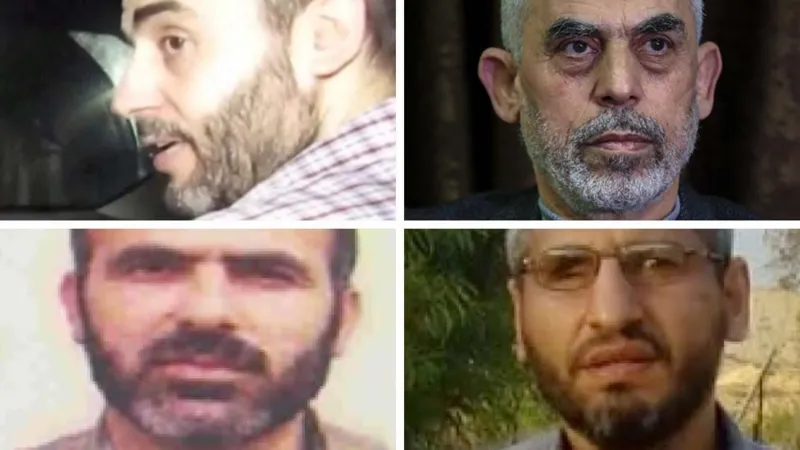
The War Council — sometimes called the Quintet Council — operated with extreme secrecy. Its five known or suspected members rarely met in person, instead using secure cable phones and trusted intermediaries to avoid surveillance. Together, they plotted the surprise offensive that triggered Israel’s ongoing military campaign in Gaza.
The confirmed fates of the council members are as follows:
- Mohammed Deif – Head of Hamas’s military wing; killed in July 2024.
- Yahya Sinwar – Political chief of Hamas in Gaza; killed in October 2024 during a gunfight.
- Mohammad Sinwar – Senior commander and Deif’s lieutenant; body recovered after May 2025 air strike.
- Marwan Issa – Military-political liaison; killed in March 2024.
- Unnamed Fifth Member – Hamas’s security chief; incapacitated after an earlier airstrike.
The council’s annihilation has left a power void just as Hamas reels from more than 20 months of relentless Israeli military operations, economic collapse, and growing international isolation.
💥 7 October Attack: A Risk With No Exit?
The 7 October attack was unprecedented in scale and brutality, leading to a war that has devastated much of Gaza. The extensive tunnel networks and years of military stockpiling shocked Israeli intelligence and regional observers alike.
Yet, despite the strategic depth of the assault, internal sources suggest the War Council did not develop a viable political exit strategy, leading many Palestinians to describe the operation as a “suicidal gamble.”
With most of the architects now dead, critical questions remain unanswered:
- Was there internal dissent within the council?
- What were the true motivations behind the timing of the assault?
- Was it aimed at reshaping regional geopolitics, or simply breaking Gaza’s long-standing blockade?
🏴 Fragmentation or Recalibration?
With its central command decapitated, Hamas now risks splintering or losing control to rival groups. Its external leadership, last known to be in Qatar before vanishing from public view in late 2024, is under intense pressure. Meanwhile, Gaza’s civilian infrastructure lies in ruins.
Experts say this could lead to the emergence of new, potentially more radical factions, or open the door for alternative Palestinian movements seeking to fill the power vacuum.
The fall of the War Council marks the end of a clandestine era of Hamas leadership. Whether this moment will be remembered as an act of ultimate resistance or strategic failure may depend on what rises from the ashes of its leadership.