Tensions Soar as Netanyahu Vows Israeli Jets Will Fly Over Tehran
In a dramatic escalation of hostilities, Israeli Prime Minister Benjamin Netanyahu has pledged that Israeli warplanes will soon be seen “over the skies of Tehran,” following Iran’s retaliatory missile attacks on Friday. The Israeli military claims to have hit over 150 Iranian targets within 24 hours, including high-profile nuclear sites and military facilities.
Netanyahu vowed that Israel will strike “every site and every target of the ayatollah regime,” asserting the nation’s right to self-defense and a mission to “thwart a dual threat” posed by Iran’s nuclear ambitions and ballistic missile capabilities.
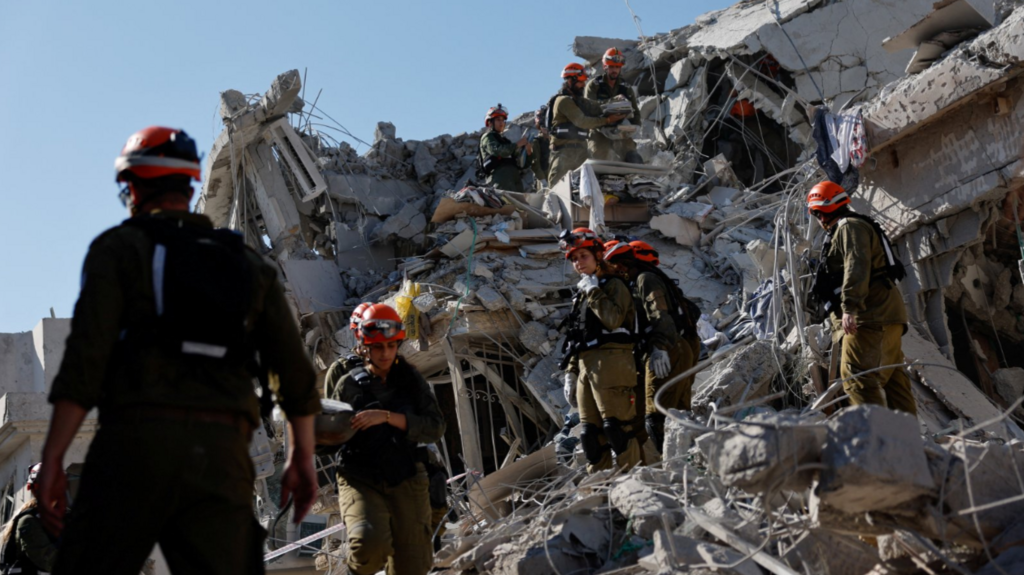
The conflict, triggered by Iran’s missile response to prior Israeli airstrikes, has led to mounting casualties. Israeli officials report three dead and dozens injured in various cities, including Rishon LeZion, where rescue workers comb through wreckage. Meanwhile, Iranian state TV claims that over 60 people have been killed in strikes on Tehran.
Iranian President Masoud Pezeshkian has warned of a “more severe and powerful response” if Israeli attacks persist. He made this declaration in a call with Pakistan’s Prime Minister, further amplifying fears of a broader regional war.
Satellite imagery confirms severe damage to Iran’s nuclear facilities, including the Uranium Conversion Facility and Fuel Plate Fabrication Plant in Isfahan. The IAEA also reported destruction at the Natanz enrichment site, although it noted no radiation leaks.
Amid the escalating military conflict, diplomatic channels have collapsed. Planned nuclear talks between Iran and the United States, scheduled for Sunday in Oman, have been canceled. Mediator Oman confirmed the cancellation, though emphasized that “diplomacy remains the only path to peace.”
The UK has responded by deploying additional jets to the Middle East “for contingency support,” while reiterating its call for de-escalation. Prime Minister Keir Starmer affirmed the UK’s alliance with Israel but refrained from confirming any direct military involvement.
Meanwhile, the United States remains publicly committed to future nuclear negotiations, though Iranian officials have dismissed such efforts as “unjustifiable” in light of continued Western support for Israel.
Former U.S. negotiator Robert Malley described the situation as a “powder keg that has already blown up,” warning that the conflict may be far from over and could “head in a more dangerous direction.”
As Israeli planes continue to strike deep into Iranian territory, targeting both military leadership and infrastructure, the possibility of full-scale regional war looms large. Israel claims to have eliminated 20 top Iranian commanders, including intelligence chief Gholam-Regha Merhabi.
Military analysts caution that while Israel has succeeded in striking above-ground targets, many of Iran’s key nuclear facilities are buried deep underground. Experts suggest that without access to U.S.-grade bunker-buster munitions, Israel may be unable to fully neutralize Iran’s nuclear capabilities.
The world watches as both nations dig in, with diplomacy faltering and rhetoric intensifying. The Israel-Iran conflict escalation threatens to redraw the geopolitical map of the Middle East.