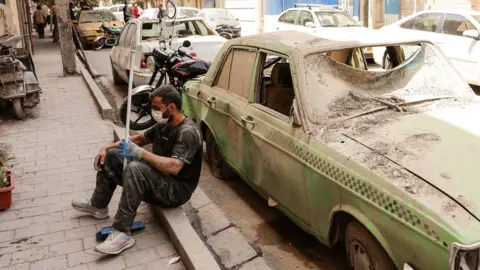
Tehran is waking up again. Cafes are reopening, traffic is creeping back onto the city’s grand highways, and shopkeepers are dusting off stalls in the historic bazaars. But beneath the surface, the trauma from Israel’s intense 12-day military assault is raw and unresolved.
At the Boof Cafe, tucked within the walled compound of the former US Embassy, barista Amir pours iced Americanos with a smile. But he doesn’t hide his exhaustion. “US sanctions hurt our businesses and make it hard for us to travel,” he says, his tone weary but hopeful. “I just want relations to get better.”
The scene at the café is a microcosm of Iran’s divided soul: a veiled woman sits quietly at one table while across the room, another woman defies dress codes, embracing her boyfriend in jeans and flowing hair. Even in this moment of calm, Tehran feels split between past and future.
War’s Visible Scars
Just blocks away, at the IRIB state TV compound, a burnt-out shell of twisted steel and ash is all that remains of a main studio — struck by an Israeli missile on June 16. Cameras, lights, and tripods have melted into useless metal. The building’s acrid smell lingers, a stark reminder of the destruction.
In a makeshift office amid the ruins, a small TV plays a broadcast of Supreme Leader Ayatollah Ali Khamenei’s first public speech since President Donald Trump announced a sudden ceasefire earlier this week.
“The Americans have opposed the Islamic Republic from the beginning,” declared the 86-year-old leader, who reportedly took shelter in a bunker during the Israeli offensive. “They want us to surrender.”
Israel justified the bombing of the IRIB facility by accusing it of concealing military operations — claims denied by Iranian journalists. Regardless, the strike symbolized what many here see as the darkest days in decades.
Hospitals Overflowing With the Wounded
At Taleghani General Hospital, the emergency ward is still overflowing. Nurse Ashraf Barghi describes the night of the June 23 strike on Evin Prison as the most horrific of her 32-year career.
“We thought the war was over. But I’m scared they’ll attack again,” she confides, eyes filled with dread.
Nearby, Morteza, a transport worker at the prison, shows injuries from the strike that Israel labeled “symbolic.” “They say they only hit military sites — lies,” he says, visibly angered.
According to Iran’s health ministry, 627 people were killed and nearly 5,000 injured in the Israeli bombardments and US-led attacks on nuclear sites.
The Human Toll and Uncertain Future
At the iconic Azadi Tower, a concert by the Tehran Symphony Orchestra attempts to restore normalcy. Families gather, couples sway to patriotic melodies, and yet, many weep.
“They weren’t good days,” says Mina, a young woman who breaks down mid-sentence. “We tried so hard for a better life… now we don’t know what’s next.”
Among the crowd are Iranians of all beliefs — supporters and critics of the regime alike — united by grief and fear for their country’s future.
Ali Reza, a middle-aged man, offers a simple plea to his government: “They have to listen to the people. We just want more freedom.”
Nearby, 18-year-old Hamed bristles with quiet defiance: “Attacking our nuclear bases to send a message — that’s not diplomacy,” he says.
Ceasefire, But for How Long?
The ceasefire, announced by former President Trump, remains fragile. Many believe it’s only a matter of time before fighting resumes. Legal restrictions still bar international media from broadcasting to Persian services, but on the streets of Tehran, citizens are freely voicing what’s long been suppressed.
“We speak our truth,” says Hamed. “Because no one else will speak it for us.”
As Tehran’s skyline glows under a calm summer sky, its people wait — not in peace, but in limbo.