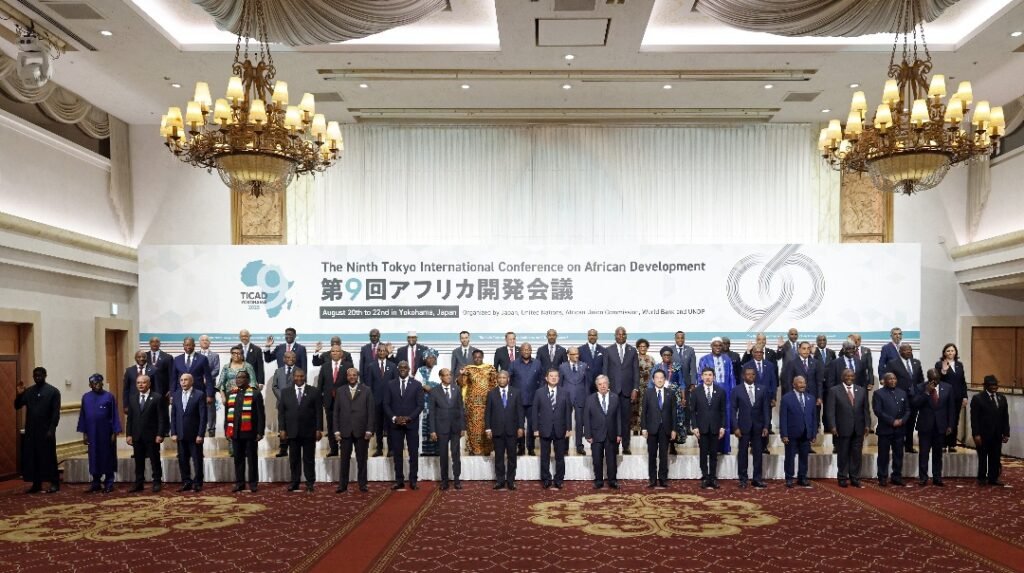
Japan has opened its doors to African leaders for the 9th Tokyo International Conference on African Development (TICAD 9), positioning itself as a strategic partner for Africa amid growing debt challenges and reduced Western aid.
The high-level summit, which began on August 20, 2025, in Yokohama, brought together leaders such as Nigerian President Bola Ahmed Tinubu, South Africa’s Cyril Ramaphosa, Kenya’s William Ruto, and UN Secretary-General Antonio Guterres, alongside host Prime Minister Shigeru Ishiba.
Africa’s Debt and Development Challenges
African economies continue to battle debt burdens worsened by conflict, climate change, and declining foreign aid. Ramaphosa’s office noted that the “debt and liquidity crisis is constraining governments from providing social safety nets for their citizens.”
For years, China’s Belt and Road Initiative financed Africa’s infrastructure — from railways to shipping ports — but fresh lending has slowed. At the same time, African nations are now facing what experts call a “tidal wave of debt” owed to Beijing and global creditors.
Adding to this, Western aid has declined significantly, especially after the restructuring of the US Agency for International Development (USAID) under Donald Trump’s administration.
Japan’s Vision for Africa
During TICAD 9, Japan is expected to push for new free-trade deals, loan guarantees, and incentives to attract Japanese firms to Africa. Ishiba emphasized that Africa’s young population and natural resources present major opportunities for global growth.
“We want to identify the needs of our partners and earn their trust, thereby fulfilling our role as a nation,” Ishiba said. He also proposed an economic zone linking Africa with the Indian Ocean region, underscoring Japan’s long-term vision for cooperation.
Commitment to Technology and Skills Development
In a significant pledge, Japan announced plans to train 30,000 artificial intelligence (AI) experts over the next three years. The initiative is designed to drive Africa’s industrial digitalization and boost job creation.
Japan’s largest business lobby, Keidanren, urged the government to build deeper trust with African nations by actively addressing development and social challenges.
Outlook
Since its launch in 1993, TICAD has been a cornerstone of Japan’s Africa policy. With this year’s edition, Tokyo seeks to differentiate itself from Beijing by offering sustainable partnerships based on trust, trade, and technological collaboration.
As Ishiba put it, “Rather than focusing on our own needs, we want to connect Africa’s human and material resources to Japan’s growth and global prosperity.”