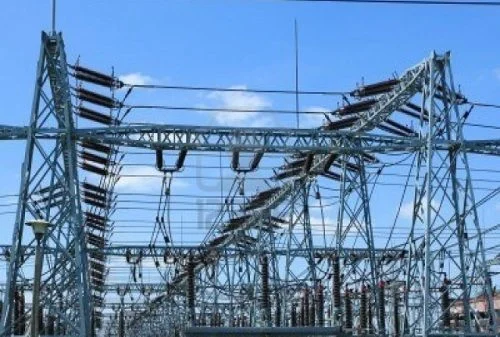
Nigeria’s national electricity grid collapsed twice within four days by January 27, plunging millions into darkness yet again and laying bare the deep-seated dysfunction that has come to define the power sector.
Power generation crashed from 3,825 megawatts to a shocking 39MW within minutes, according to confirmations by Eko Electricity Distribution Company. As usual, the Nigerian Independent System Operator downplayed the incident, describing it as a “system-wide disturbance” that resulted in a nationwide outage.
This marked the third grid collapse in less than one month, following similar incidents on December 29, 2025, and January 23.
A System Defined by Failure
Grid collapse is no longer an exception in Nigeria — it is the norm.
Data from the Nigerian Electricity Regulatory Commission (NERC) show that between 2010 and 2022, the country recorded at least 222 partial and total grid collapses. An additional 12 collapses occurred across 2024 and 2025, underlining the worsening fragility of the system.
Businesses grind to a halt, households are forced to rely on noisy and polluting generators, and productivity is crippled. Yet electricity was first generated in Nigeria in 1896 — more than 130 years ago. Today, Africa’s most populous nation still gropes in darkness.
Infrastructure Too Weak to Carry Power
Although Nigeria boasts an installed capacity of about 13,000MW, its antiquated transmission network can barely wheel 5,000MW. Any additional load risks system collapse.
The problems are well known:
- Ageing transmission lines and transformers, some over 50 years old
- Chronic frequency instability outside the safe 49.5–50.5Hz band
- Persistent gas shortages crippling thermal plants
- Sabotage of key infrastructure, including the 330kV Shiroro–Mando line
- Lack of spinning reserves to stabilise outages
- Distribution companies rejecting load due to decrepit networks
What is missing is not knowledge — but political will, vision and accountability, worsened by entrenched corruption.
Liquidity Crisis Choking Generation
Generation companies blame a severe liquidity crunch. As of 2024, the Nigerian Bulk Electricity Trading Company (NBET) owed GenCos about ₦4 trillion, with an additional ₦762bn outstanding by mid-2025.
Unable to fund maintenance or secure gas, plants trip frequently, triggering nationwide outages. Although the Federal Government raised ₦501bn in bonds to partially offset the debt, liabilities continue to balloon.
Systemic failure has become endemic.
Privatisation Without Reform
The 2013 power sector privatisation promised efficiency and investment. Instead, it delivered deeper misery.
Many GenCos and DisCos — some backed by retired military officers — acquired licences without adequate capital or technical capacity. Some reportedly borrowed money merely to pay licence fees.
Rather than invest in infrastructure, operators focused on billing and revenue extraction, pushing inflated tariffs to mask inefficiencies and regulatory failure. Consumers now pay more for worse service — an indefensible outcome.
Billions Spent, Little to Show
Since 1999, Nigerians have endured 190 to 240 days of power outages annually.
Former President Olusegun Obasanjo’s $12bn–$16bn power sector spending between 1999 and 2007 disappeared into corruption, yielding plants without gas connections.
The 3,050MW Mambilla Hydropower Project, first proposed in the 1980s, remains stalled amid scandals and legal battles over a $5.8bn Chinese loan.
The Buhari administration’s Siemens deal produced more photographs than megawatts. The Tinubu administration appears to be following a similar script, with projects like the 624MW Abuja power plant still stalled despite near completion.
Power for the Few, Darkness for the Many
While ordinary Nigerians endure blackout after blackout, the ₦10bn Aso Rock solar project guarantees uninterrupted electricity for the Presidency. This contrast is indefensible.
Nigeria’s per capita electricity consumption stands at just 144kWh annually, among the lowest globally — compared with:
- Egypt: 1,700kWh
- South Africa: 3,800kWh
- Tanzania: 180kWh
Even Ethiopia, at roughly 150kWh per capita, is poised for a leap with its 6,000MW Grand Ethiopian Renaissance Dam.
Economic Cost Is Crushing
Major firms — including Dangote Industries, MTN, Nigerian Breweries and Honeywell — have abandoned the grid, installing over 6,500MW of captive power.
In 2025 alone, over 20 firms exited the grid, adding 1,045MW of off-grid capacity. Manufacturers lose an estimated ₦10.1tn annually, while MSMEs face soaring costs from diesel generators and tariff hikes exceeding 200%.
In 2023, 767 manufacturing firms shut down, costing 18,000 jobs, with more closures following in 2024.
The World Bank estimates power outages cost Nigeria $29bn annually, about 10% of GDP.
Decentralisation Offers a Way Forward
The 2023 Electricity Act, which allows states to generate and regulate electricity, offers a glimmer of hope.
States such as Lagos, Enugu, Ekiti, Ondo, Imo, Edo, Oyo and Kogi have established electricity regulators, while others are following.
Aba Power’s 141MW gas plant serving Abia’s industrial hub shows what is possible when private investment meets regulatory support.
Nigeria must decentralise the grid into regional clusters, deploy smart technologies to isolate faults, enforce spinning reserves, close the metering gap, and hold DisCos accountable using the Federal Government’s 40% equity stake.
No More Excuses
Nigeria cannot afford another decade of darkness while peers power ahead in industrialisation and innovation.
Reliable electricity is not optional — it is foundational. Until governance replaces excuses and reform replaces rhetoric, grid collapse will remain Nigeria’s most predictable failure.