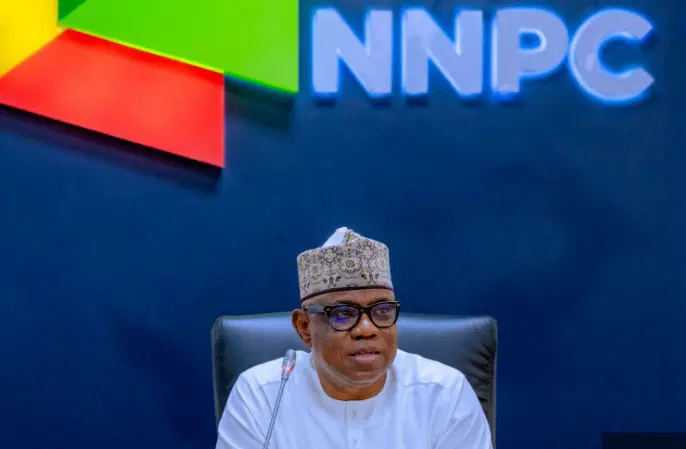
Abuja – Conflicting reports have emerged regarding the status of Bayo Ojulari, the Group Managing Director of the Nigerian National Petroleum Company Limited (NNPCL), amid claims that he was pressured by the Economic and Financial Crimes Commission (EFCC) into resigning over a $21 million corruption scandal.
Sources allege that EFCC operatives, alongside the Director-General of the Department of State Services (DSS), Adeola Ajayi, orchestrated the late-night operation on Friday—without the express authorization of President Bola Tinubu. The move has been described as a “civilian coup” by political observers.
However, the Presidency has firmly denied any such development. Bayo Onanuga, Special Adviser to the President, confirmed Saturday that Ojulari remains the substantive head of NNPCL. Ojulari was appointed in April 2025 to spearhead a wave of reforms aimed at restructuring the national oil giant.
Attempts to reach EFCC spokesperson Dele Oyewale for clarification were unsuccessful at the time of reporting.
$21 Million Scandal Sparks Public Outcry
Ojulari’s troubles are linked to a $21 million (₦34.65 billion) scandal involving alleged kickbacks from oil traders and pipeline contractors. Civil society groups—including OilWatch Nigeria and the Workers’ Rights Alliance—have staged protests demanding his arrest and prosecution.
These groups point to the alleged confession of a detained associate, Abdullahi Bashir Haske, who reportedly claimed to have held the funds for Ojulari. The coalition has accused Ojulari of economic sabotage, citing prolonged refinery shutdowns and suspected plans to privatize NNPCL assets.
Protests and Political Division
A three-day protest commenced on August 1 across key government locations, including the National Assembly, NNPCL headquarters, and EFCC offices. Demonstrators are demanding transparency, accountability, and immediate prosecution.
Amid the backlash, whistleblowers claim Ojulari reassigned responsibilities for fund collection, leading to the uncovering of the alleged scheme and the freezing of implicated accounts by the EFCC.
Defenders Say Allegations Are Politically Driven
Groups such as the Coalition for Good Governance and Change Initiatives (CGGCI) and the Human Rights Writers Association of Nigeria (HURIWA) argue the attacks on Ojulari are politically motivated, designed to stall his reform agenda.
They highlight Ojulari’s achievements, including real-time monitoring systems, auditing of opaque contracts, and stabilization of fuel supply—initiatives they say have reduced petrol queues and improved accountability.
Lavish Spending, Staff Resignations Also in Focus
Despite support from some quarters, critics have raised concerns about alleged excesses under Ojulari’s watch, including a high-cost retreat in Kigali involving private jets, and a toxic work culture that reportedly led to staff resignations.
The Niger Delta Environmental Justice Coalition (NDEJC) also condemned the alleged EFCC-DSS operation, labeling it a political witch-hunt. However, the group acknowledged Ojulari’s role in improving oil production and remittances.
EFCC Yet to Confirm Allegations
As of 9:00 pm on Saturday, the EFCC has not released an official statement regarding Ojulari’s arrest or resignation. With no formal charges or confirmation, the situation remains murky amid escalating political tension and public speculation.