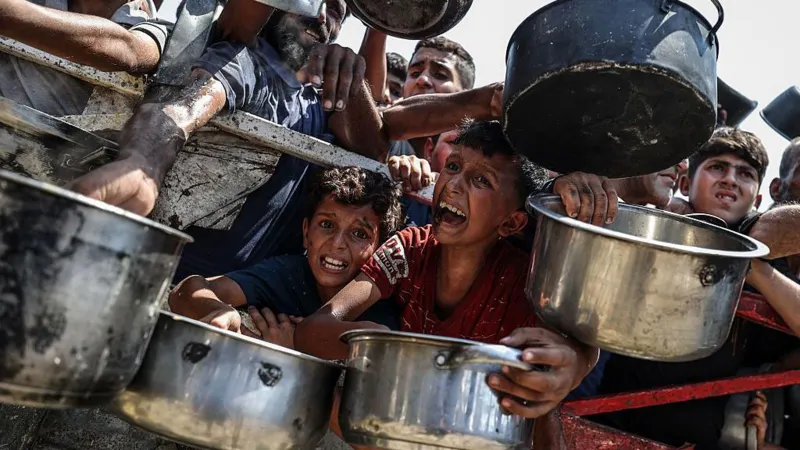
A famine is “currently playing out” in Gaza, according to a new alert from the UN-backed Integrated Food Security Phase Classification (IPC), which says conditions are rapidly deteriorating across the war-torn territory.
The report reveals that two key famine thresholds—related to food consumption and acute malnutrition—have already been breached in large parts of Gaza, including Gaza City. Although an official declaration of famine is still pending, experts warn that deaths from starvation and malnutrition are rising.
“The worst-case scenario of famine is currently playing out,” the IPC said, calling for immediate cessation of hostilities and unrestricted humanitarian access.
Since the war escalated, Gaza has seen an alarming rise in hunger-related deaths. According to UN agencies and Gaza’s Hamas-run health ministry, at least 147 people—88 of them children—have died from malnutrition since the conflict began, with 63 of those deaths occurring just in July.
Despite Israel’s claims that there are “no restrictions” on humanitarian aid, UN officials argue that aid deliveries remain dangerously limited, with much-needed food, medical supplies, and fuel failing to reach the 2.1 million people in Gaza.
What Does a Famine Classification Require?
The IPC defines a famine using three indicators:
- At least 20% of households facing extreme food shortage (Phase 5).
- At least 30% of children suffering from acute malnutrition.
- Two or more deaths per 10,000 people per day, or four child deaths per 10,000 children, from hunger or hunger-related illness.
Currently, the first two thresholds have been met in parts of Gaza. However, collecting accurate death rate data has become nearly impossible due to Gaza’s collapsed health system, now crippled by nearly three years of conflict and the ongoing Israeli military campaign.
Dire Conditions on the Ground
The IPC and Gaza Nutrition Cluster report over 20,000 children treated for acute malnutrition between April and mid-July, including more than 3,000 classified as severely malnourished.
Hospitals have recorded at least 16 starvation-related child deaths since July 17, and more fatalities are expected unless immediate aid reaches those in need.
“None of this is possible unless there is a ceasefire,” the IPC alert stressed, urging governments to act urgently to end the humanitarian catastrophe.
The World Food Programme (WFP) and Unicef say that the amount of food and nutrition aid entering Gaza since Israel partially eased its blockade is “barely a trickle.” They estimate over 62,000 tonnes of aid—equivalent to 3,100 truckloads per month—are needed to meet basic survival needs.
Israel’s Response
Israeli officials deny that famine is occurring. Foreign Minister Gideon Saar stated that while the situation is “tough,” accusations of a starvation policy are “lies.”
“Who is responsible for this tough reality? Hamas,” Saar said. “There is no policy of starvation—on the contrary.”
Israel claims 5,000 aid trucks have entered Gaza over the past two months and says it’s facilitating humanitarian aid via airdrops, tactical pauses, and designated corridors.
Though Israel accuses Hamas of stealing aid, both the New York Times and internal U.S. government reports say there’s no evidence of systematic aid theft by Hamas.
Background
The war began after Hamas’s October 7, 2023 attack on southern Israel, which left 1,200 Israelis dead and 251 taken hostage. Since then, Gaza’s health ministry reports over 60,000 Palestinians killed, with many more injured or displaced.
As conditions worsen, the IPC warns that waiting for an official famine declaration to act is “unconscionable.” WFP Director Cindy McCain echoed the urgency:
“We need to flood Gaza with large-scale food aid, immediately and without obstruction… People are already dying.”