Federal Highways of Horror 2: Motorists, Travellers in Anguish Across Nigeria
By Emma Amaize, Soni Daniel, Dayo Johnson, Sam Oyadongha, Olasunkanmi Akoni, Wole Mosadomi, Ademola Akinyemi, Bashir Bello, Ndahi Marama, Peter Duru, Therese-Marie Nanlong, Steve Oko, Jeff Agbodo, Charly Agwam, Femi Bolaji, Idris Salisu, Haruna Aliyu, Musa Ubandawaki, Abel Daniel, Egufe Yafugborhi, Ozioruva Aliu, Emma Unah, Dan Abia, Ochuko Akuopha, Ike Uchechukwu & John Alechenu
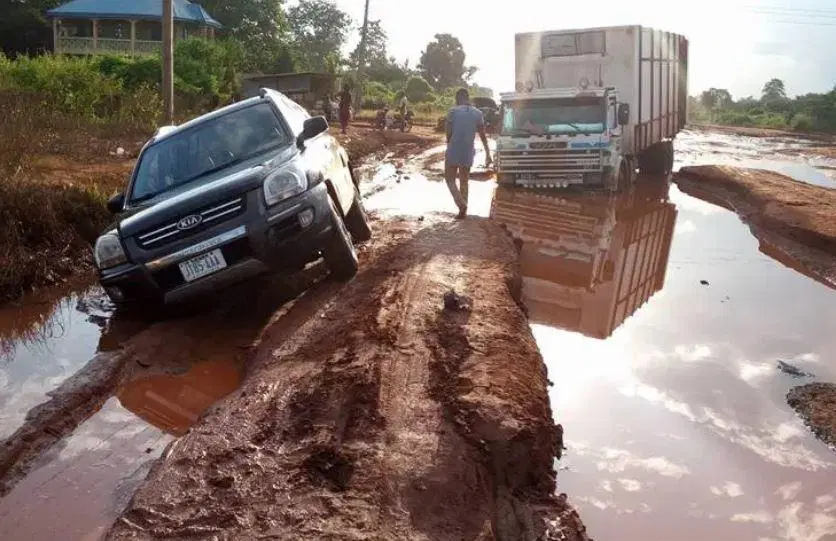
Across Nigeria, motorists and travellers are trapped in daily anguish as federal highways crumble into dangerous, impassable routes. From the South-East to the North, commuters endure endless delays, vehicle breakdowns, and even deadly attacks on highways that should connect — but now isolate — communities.
While a few roads are receiving attention, countless others have collapsed completely, turning interstate travel into a nightmare. Despite federal contracts awarded years ago, many projects remain abandoned or stalled, forcing state governments to step in.
🧭 South-East: Potholes, Broken Bridges, and Abandoned Projects
In Abia and Ebonyi States, numerous federal roads have fallen into ruin. The Umuahia–Ikot Ekpene Road, vital for trade between the South-East and South-South, is riddled with craters despite a federal contract awarded over five years ago.
Governor Alex Otti’s administration has managed partial repairs, but roads like Ohafia–Arochukwu and Umuahia–Bende–Ohafia still torment commuters daily.
In Ebonyi, residents decry the decaying Abakaliki–Afikpo, Afikpo–Okigwe, and Ngbo–Benue roads. Protesters in Ohaukwu Local Government lament that their communities are cut off, and farm produce now rots due to inaccessible routes.
🌾 Northern Nigeria: Roads of Death and Despair
In the North, heavy rains have worsened already collapsed roads, making travel perilous.
In Nasarawa, the Lafia–Namu and Keffi–Toto roads have become kidnappers’ havens. Motorists endure up to eight-hour journeys on routes that once took two hours.
Zamfara’s Gusau–Dansadau Road, built in 1982, has degenerated into a death trap, with bandits now controlling stretches of the highway.
In Taraba, the Jalingo–Numan and Wukari–Jalingo roads remain abandoned for years, crippling economic activity on the Mambilla Plateau.
From Kwara’s Ajase–Offa–Osogbo route to Benue’s Makurdi–Naka corridor, bad roads have turned travel into torture. Armed attacks and vehicle breakdowns are daily realities.
🚧 Other Regions: Endless Repairs, Empty Promises
In Bauchi, Kebbi, Kano, and Borno, rehabilitation work crawls at a snail’s pace. Many federal projects have been abandoned mid-way, leaving commuters stranded in pools of mud and potholes.
Niger State, with Nigeria’s longest stretch of federal roads (over 1,400 km), has over 80% of its highways in deplorable condition. These include the Mokwa–Tegina–Kaduna and Suleja–Lapai–Agaie routes — now hotbeds for banditry.
Plateau State, a key link between the North and other regions, faces similar neglect. The Jos–Abuja and Jos–Bauchi highways have deteriorated rapidly, crippling trade and inflating transport costs.
⚠️ Government Response and Public Outcry
Officials of the Federal Ministry of Works and FERMA cite inadequate funding, heavy rainfall, and overuse by articulated trucks as causes of the deterioration. But for millions of Nigerians, these explanations ring hollow.
The roads remain death traps, the people remain stranded, and the promise of safe highways remains distant.