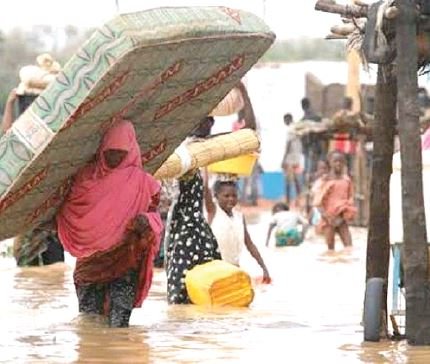
More than 20 Nigerian states have been placed on high alert following a fresh flood warning by the Nigerian Meteorological Agency (NiMet). The July 2025 forecast predicts intense rainfall and flash flooding, prompting mass evacuations and emergency actions across affected regions.
NiMet’s Warning: Flood-Prone States Listed
According to NiMet’s bulletin, the states at risk include:
Sokoto, Lagos, Edo, Benue, Yobe, Bayelsa, Jigawa, Delta, Cross River, Kaduna, Ondo, Adamawa, Nasarawa, and others.
NiMet advised residents to:
- Relocate from low-lying areas
- Clear blocked drainages
- Prepare emergency kits
- Turn off gas and electricity when necessary
- Promote community-level awareness
Despite over ₦620 billion allocated in ecological funds since 2012, state-level response remains weak, fueling recurring floods and property losses.
State-by-State Developments and Reactions
Lagos: Tidal Surge Causes Flash Floods
Residents in flood-prone parts like Ajegunle, Lekki, and Ikoyi are relocating. The Lagos State Government linked recent flooding to rising tides from the Atlantic Ocean and Lagos Lagoon.
Commissioner for Environment Tokunbo Wahab assured that emergency and drainage teams are active across the city.
“Waste dumping worsens flooding. Residents must act responsibly,” Wahab tweeted.
Kaduna: Safe Havens Activated
In Kaduna, residents of Kigo Road, Romi, and Kurmin-Mashi are heeding warnings. The State Emergency Management Agency (SEMA) has activated Safe Haven Centres and is broadcasting flood preparedness messages on radio and TV.
SEMA spokesperson Phillips Dominic confirmed dredging of the River Kaduna to reduce overflow risk.
Ondo: Residents on Edge
Communities like Owo, Okitipupa, and Ilaje are already reporting losses. Deputy Governor Dr. Olayide Adelami said sensitization efforts are ongoing across all 18 LGAs.
“We’re clearing water channels and warning residents against dumping refuse,” he said.
Yobe: Drainage Issues Blamed
Floods in Damaturu have prompted renewed calls for improved infrastructure. Critics say the government’s focus on flyovers has come at the expense of basic flood prevention like drainage systems.
Benue: Children Relocated
Parents in New Garage and Rice Mill areas are moving children to higher ground. The Benue SEMA is ramping up sensitization via radio and local outreach.
Jigawa: Community-Led Response
In Sundumina, Kiyawa, and Birnin Kudu, residents are clearing gutters, raising walls, and working with officials. The state government has deployed temporary embankments and drainage clearance.
Delta: Government’s Multi-Pronged Strategy
The state is investing in:
- Stormwater drainage systems
- River dredging
- Anti-littering campaigns
- IDP camp readiness
Commissioner Jamani Ejiro said flood management is being integrated into road construction projects.
Cross River: Call for Federal Support
In Calabar, flooding continues due to poor drainage. Residents demand action from both the state and the Federal Government.
Commissioner Moses Osogi assured that channels are being cleared and residents in flood zones advised to move upland.
Imo: Market Already Submerged
In Oguta LGA, the Ose-Afia Market is already partially flooded. NEMA is monitoring Oguta River levels and has ambulances and supplies ready for emergency response.
Nasarawa: Residents Planning to Flee
With warnings from the Nasarawa State Emergency Management Agency (NASEMA), residents in Doma, Toto, and Lafia are preparing to evacuate. But many cite a lack of funds to move.
Adamawa: ₦700m Flood Fund Released
The Adamawa SEMA has launched proactive campaigns and stocked warehouses with relief materials after Governor Fintiri approved a ₦700 million emergency fund.
Edo: Mixed Reactions to Preparedness
While residents in Etsako Central, Uselu, and Anegbete brace for evacuation, officials say drainage clearing and community outreach are ongoing.
Expert Insight: Government Not Doing Enough
Environmental advocate Mayokun Iyaomolere criticized the insufficient use of ecological funds.
“With this kind of budget, recurring floods are unacceptable. The government must act more decisively and involve communities in prevention.”
Conclusion: Urgent Action Needed
As climate change continues to intensify weather events in Nigeria, a coordinated response involving state, federal, and local stakeholders is critical. While some communities are relocating, others wait for aid that may arrive too late.