As the Israel-Iran conflict enters its fifth day of escalation, Israeli forces have launched precision strikes on Iran’s nuclear, military, and energy infrastructure, raising alarm over the stability of the global energy market.
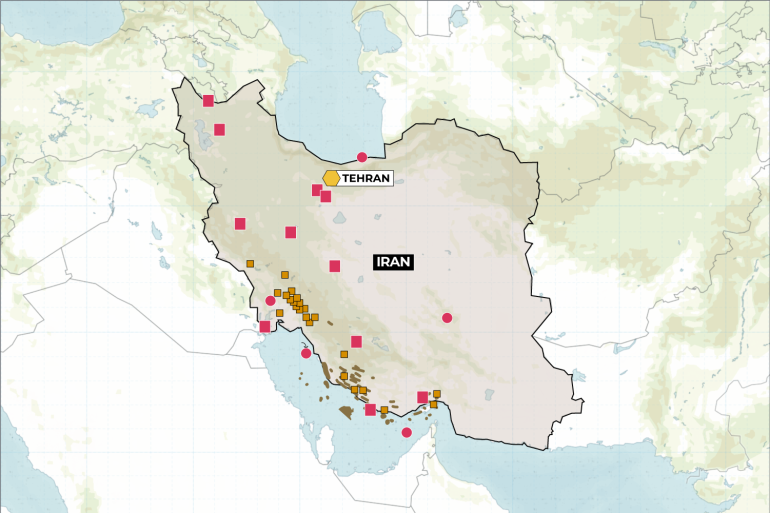
Among the most critical sites targeted are South Pars gasfield, the Fajr Jam gas plant, and several oil storage and refining facilities including Shahran oil depot, Tehran fuel depots, and Shahr Rey refinery.
Iran’s Energy Sector at a Glance
Iran ranks among the top 10 oil and gas producers globally. It holds:
- The second-largest proven natural gas reserves in the world (16% of global supply)
- The third-largest crude oil reserves (157 billion barrels)
In 2023, Iran produced 3.3 million barrels of crude oil per day, exporting nearly 2 million barrels of crude and refined fuel daily. Net oil export revenue reached $53 billion, making the sector essential to the Iranian economy.
However, sanctions and limited foreign investment have kept output below full potential.
Where Are Iran’s Oil Facilities?
Iran’s energy infrastructure is concentrated mainly in the south and southwest, with significant installations onshore and offshore:
🔶 Key Onshore Oilfields:
- Ahvaz – Iran’s largest and one of the world’s biggest oilfields
- Gachsaran, Marun, Agha Jari, Bibi Hakimeh, Karanj – mostly in Khuzestan Province
🔷 Offshore Oilfields:
- Abuzar, Doroud, Foroozan, and Salman – in the Gulf, shared with Saudi Arabia and UAE
🛢️ Main Refineries:
- Abadan – among the largest and oldest in the Middle East
- Tehran, Isfahan, Arak, Tabriz, Bandar Abbas – serve both domestic and export demands
🚢 Export Terminal:
- Kharg Island – Iran’s primary oil export hub, handling 1.5 million barrels/day
Over 20% of global seaborne oil transits through the Strait of Hormuz, near these sensitive sites.
Iran’s Gas Industry and Key Sites
With 1,200 trillion cubic feet of proven natural gas reserves, Iran accounts for 45% of OPEC’s gas. In 2023, it produced 9.3 trillion cubic feet, ranking third globally behind the US and Russia.
🔶 Key Gasfields:
- South Pars – the world’s largest gasfield, shared with Qatar
- North Pars, Golshan, Ferdowsi, Kangan, Nar
🏭 Major Processing Plant:
- South Pars Gas Complex – located in Bushehr Province
Sites Targeted by Israel
Israeli airstrikes have zeroed in on energy infrastructure critical to Iran’s economy and regional energy supply:
- South Pars gasfield – the crown jewel of Iran’s gas sector
- Fajr Jam gas plant – a key processing site
- Shahran oil depot
- Shahr Rey oil refinery – near Tehran
- Tehran fuel depots
Global Implications
Following the initial attacks, global oil prices jumped nearly 7%, with fears of broader conflict disrupting energy supplies from the region. The Strait of Hormuz remains a critical chokepoint; any obstruction could rattle oil markets worldwide.
Iran’s diversified yet fragile energy sector now stands at the frontline of geopolitical tensions, as the risk of prolonged conflict looms.