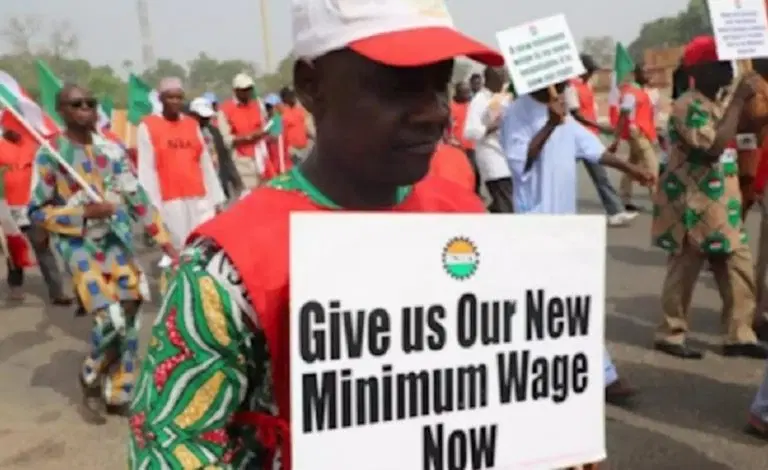
The Nigeria Employers’ Consultative Association (NECA) has declared that state governments have no justification for refusing to pay civil servants above the ₦70,000 minimum wage, considering the rising cost of living and increased federal allocations to states.
Speaking on Channels Television’s The Morning Brief yesterday, NECA’s Director General, Adewale Smatt-Oyerinde, said improved revenue inflows from the Federation Account had weakened excuses from some governors about their inability to implement the wage increase.
President Bola Ahmed Tinubu signed the new Minimum Wage Act in July 2024, raising the national minimum wage from ₦30,000 to ₦70,000 after months of negotiations between labour unions, government authorities, and the private sector.
Since then, some states have gone beyond the benchmark. For instance, Governor Hope Uzodimma of Imo State approved ₦104,000 as the new minimum wage, while the Ebonyi State government announced ₦90,000 for civil and public servants.
Smatt-Oyerinde maintained that no state should remain at ₦70,000 given the economic realities.
“No state really has an excuse in the current reality to stay at ₦70,000, especially with people struggling with the price of petrol. While many states are still working with CNG buses, more still needs to be done,” he said.
He stressed that addressing food security, housing, and transportation would reduce the pressure on wage demands since the purchasing power of ₦70,000 is crucial for workers’ livelihoods.
The NECA boss also highlighted that both public and private sector workers remain the key drivers of productivity and growth.
“Whatever will improve workers’ welfare will enhance motivation and productivity. If you’re hungry or struggling with shelter and transport, it’s difficult to be productive,” he added.
Smatt-Oyerinde urged state governments to view the civil service as the engine that drives governance and economic systems, insisting that workers should be treated with dignity as recommended by the International Labour Organization (ILO).