The government of Ogun State has disclosed that its total debt profile has risen to about ₦494 billion, even as the state’s internally generated revenue (IGR) climbed above ₦240 billion in 2025.
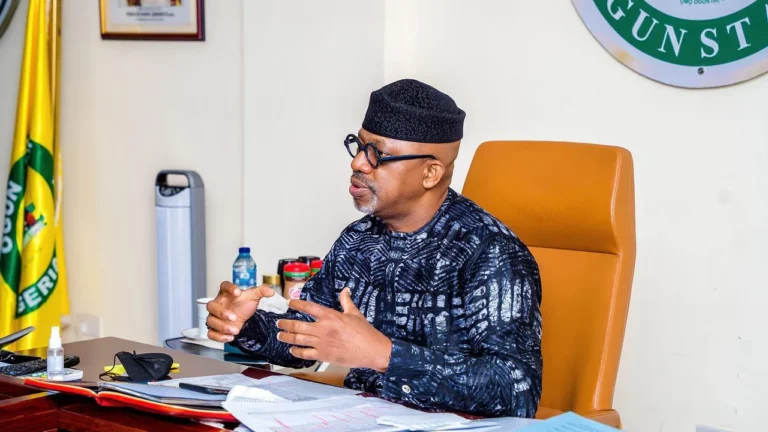
The disclosure was made by the Commissioner for Finance and Chief Economic Adviser, Dapo Okubadejo, during a media briefing on the 2026 budget.
Rising Debt Profile Explained
According to Okubadejo, Ogun’s local debt increased from ₦133 billion in 2019 to ₦194 billion as of December 2025, while foreign debt rose from ₦33 billion to about ₦300 billion within the same period.
He attributed the sharp rise in external debt largely to the devaluation of the naira.
“In 2019, one dollar exchanged at about ₦330. Today, it trades between ₦1,400 and ₦1,500. What was $100 million then is now close to ₦150 billion, even without new borrowing,” he explained.
He stressed that the state has maintained fiscal discipline and has not breached established debt management guidelines.
IGR Records Major Growth
The commissioner revealed that Ogun’s internally generated revenue grew significantly from about ₦50 billion in 2020 to over ₦240 billion in 2025.
He added that the state projects an IGR of ₦512 billion in 2026, driven by improved tax administration, business-friendly policies, and economic expansion.
“Our revenue growth reflects reforms and confidence in the state’s economy,” Okubadejo said.
Budget and Economic Expansion
Speaking at the budget briefing in Abeokuta, Okubadejo disclosed that the 2026 budget increased from ₦1.054 trillion in 2025 to ₦1.668 trillion.
He also noted that Ogun’s economy expanded from ₦3.5 trillion in 2019 to a projected ₦18.96 trillion in 2026.
According to him, this growth is linked to improved security, streamlined land acquisition processes, and massive infrastructure investments.
Infrastructure and Development Spending
The commissioner said borrowed funds had been strategically deployed to finance major infrastructure projects, hedge against inflation, and support long-term development.
“The debt has been used to fund roads, healthcare, housing, and other critical projects, even at interest rates of about 20 per cent,” he stated.
He maintained that the focus of the administration is not just the size of debt but its productive use.
Pension and Welfare Improvements
Okubadejo announced that the state government has cleared pension and gratuity arrears for retirees between 2012 and 2020.
He said annual pension payments increased from ₦6.7 billion in 2019 to ₦20 billion in 2025 and are projected to reach ₦40 billion by 2029.
He added that ₦23.3 billion had been paid in gratuities, while ₦32.8 billion in inherited local government gratuities remained outstanding.
Over 300 retirees from July 2025, he said, are currently receiving six-month palliatives pending documentation.
New Pension Benefits Introduced
The commissioner also disclosed that Ogun had introduced Additional Pension Benefits, described as the first of its kind in Nigeria.
He said amendments to the state’s pension law were underway to integrate the scheme permanently.
Budget Reforms and Sectoral Achievements
Meanwhile, the Commissioner for Budget and Planning, Olaolu Olabimtan, said the state recorded an 85 per cent budget implementation rate in 2024.
He attributed the performance to strong fiscal reforms and improved financial management.
Other officials highlighted achievements in road construction, healthcare funding, rail development, education support, and housing expansion across the state.
Abiodun Administration’s Economic Focus
Under Governor Dapo Abiodun, the Ogun government says it remains committed to sustaining economic growth, improving public finance management, and ensuring that borrowed funds translate into tangible development.
Officials insist that despite rising debt, strong revenue growth and reforms position the state for long-term financial stability and economic resilience.