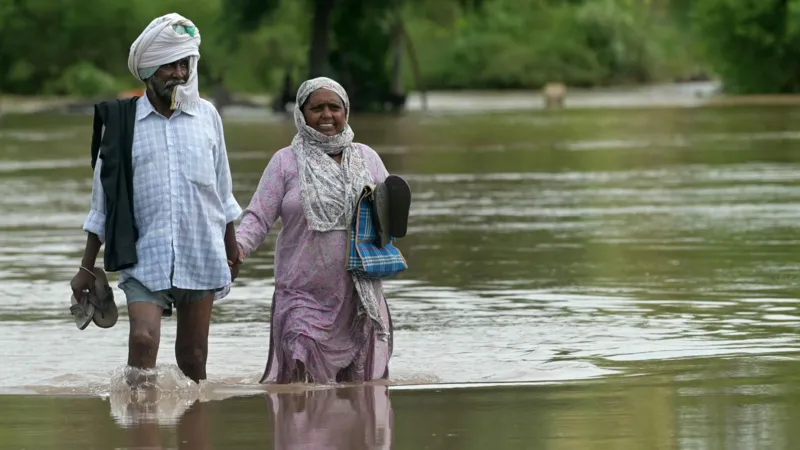
At least 30 people have been killed and more than 354,000 displaced following torrential rains and devastating floods in India’s northern state of Punjab.
Authorities have declared all 23 districts of the state “flood-hit” after rivers and reservoirs rose to near-dangerous levels, inundating entire communities. Over 20,000 residents have been evacuated from low-lying areas, while hundreds of relief camps have been set up to provide shelter, food, and medical care.
Punjab’s Chief Minister, Bhagwant Mann, described the disaster as the state’s worst flooding since 1988, urging the nation to stand in solidarity with affected communities.
The floods have severely impacted Punjab’s farmlands, submerging about 148,000 hectares of crops. Known as India’s “food basket,” the state’s agricultural damage has raised concerns over food security, with a quarter of its 30 million residents depending on farming for survival.
Disaster response teams, supported by the Indian army, air force, and navy, are leading rescue efforts. More than 100 boats and 35 helicopters have been deployed to evacuate stranded residents and deliver supplies.
In Ludhiana and other cities, homes and businesses remain underwater, leaving families counting their losses. Villagers along the Sutlej river continue to monitor water levels overnight, patching weak spots in embankments with sandbags.
India’s weather agency attributed the extreme flooding to repeated monsoon interactions with westerly disturbances, which have also caused unusual rains across northern India.
Across the border, Pakistan’s Punjab province is also grappling with severe flooding, affecting more than two million people in recent weeks.