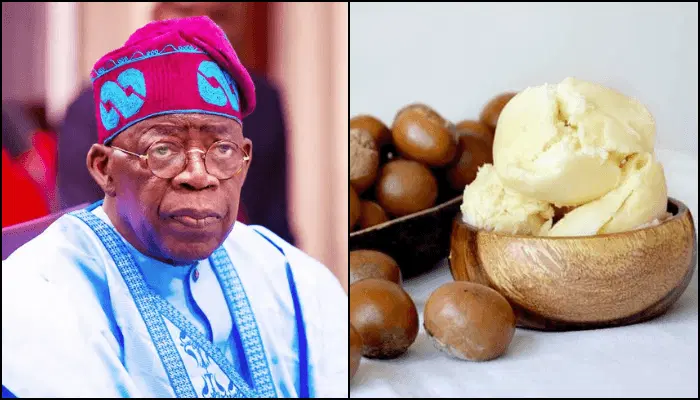
President Bola Tinubu has described the suspension of raw shea nut exports as a bold step to strengthen Nigeria’s shea industry, create jobs, and deliver greater benefits to farmers, particularly women.
On Tuesday, Tinubu approved a six-month ban on raw shea exports to curb informal trade, secure supply for local processors, and stabilise the sector. The policy is projected to help Nigeria capture more export value and generate an estimated $300 million annually in the short term.
Taking to his official X handle on Wednesday, the President stressed the need for Nigeria to move away from exporting raw materials at low value, insisting that domestic processing would unlock higher returns.
“Nigeria’s shea is our green wealth. We produce nearly 40% of the world’s supply, yet capture less than 1% of its $6.5 billion global market. That imbalance ends now,” Tinubu declared.
The President explained that the suspension followed the recommendation of the Presidential Food Systems Coordinating Unit, with the aim of strengthening local processing and protecting the shea value chain, where 95% of pickers are women.
“This is a win for our farmers, for our women, and for Nigeria,” he affirmed.
Vice President Kashim Shettima has also been tasked with working closely with stakeholders to rapidly expand domestic processing capacity, ensuring the reform translates into long-term prosperity.
Tinubu emphasized that with new markets opening in Brazil and beyond, Nigeria will no longer “export poverty and import value.” Instead, the country will build value at home, compete globally, and deliver prosperity under the Renewed Hope Agenda.
Nigeria currently produces nearly 40% of the world’s shea nuts, but has historically earned little from the multi-billion-dollar industry due to its dependence on raw exports.