UN Council Votes to Continue Eritrea Human Rights Investigation Despite Government Pushback
The United Nations Human Rights Council has rejected Eritrea’s request to end an independent investigation into alleged widespread human rights violations, in a decision hailed by advocacy groups as a win for accountability and justice.
The vote, held on Friday, July 4, 2025, saw only four countries support Eritrea’s motion to dismantle the mandate of the UN Special Rapporteur on the country’s human rights situation. Twenty-five voted against, while 18 abstained, effectively extending the probe for another year.
🧾 Why Eritrea Wanted the Mandate Scrapped
Eritrea argued that the investigation was unfair and politically motivated. Its envoy, Habtom Zerai Ghirmai, called the mandate an “affront to reason and justice”, accusing Western nations, particularly the EU, of exhibiting a “neo-colonial saviour mentality complex.”
The Eritrean government claimed that any rights challenges it faces are due to “capacity constraints” common to other developing nations—not a result of systemic abuses.
🔍 Human Rights Groups Applaud the Decision
Human Rights Watch called the vote a strong message that the international community will not be swayed by efforts to silence or discredit independent human rights monitoring. The group warned that Eritrea’s push was clearly aimed at distracting from its dire human rights record.
Pan-African group DefendDefenders added:
“The Special Rapporteur plays a vital role for victims, survivors, and the broader Eritrean diaspora.”
The European Union, which led the counter-resolution to extend the probe, warned that terminating the mandate would allow “impunity and repression to deepen in silence.”
📚 Background: Years of Allegations and Global Concern
In June 2025, UN Special Rapporteur Mohamed Abdelsalam Babiker, a Sudanese rights lawyer, reported that Eritrea had shown no meaningful progress on human rights and accountability.
He echoed findings from a 2016 UN Commission of Inquiry, which accused the government of crimes against humanity, including:
- Systematic torture and arbitrary detention
- Forced labour and indefinite national service
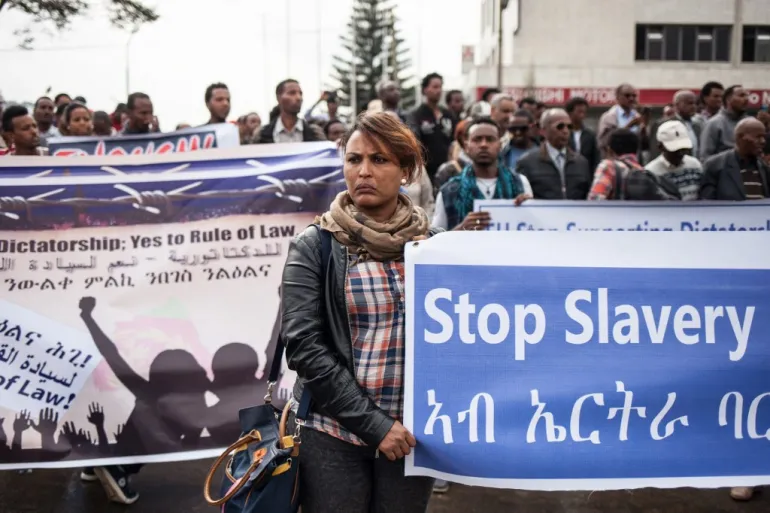
- The “enslavement” of an estimated 400,000 Eritreans
These allegations trace back decades and are rooted in the harsh national service program, often compared to lifetime conscription.
🌍 Who Supported Eritrea’s Motion?
The countries that voted in favour of Eritrea’s resolution included:
- Iran
- Sudan
- Russia
- China
All four are either under UN investigation themselves or have opposed independent rights mandates, arguing such efforts “waste international resources.”